
- About Us
- Products
- Services
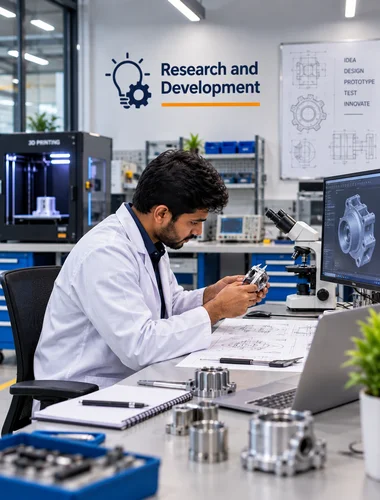
Research and Development
Understanding Customer Needs
- Industry-Specific Applications: Investigate the use of induction heating across various industries, including automotive, aerospace, metalworking, and electronics. Each sector has distinct requirements and challenges that must be understood to develop effective solutions
- Customer Pain Points: Pinpoint common problems experienced by users of current induction heating systems, such as issues with energy efficiency, inconsistent heating, and high operational costs. Identifying these pain points is crucial for developing improvements that address real-world concerns.
- Technological Requirements: Explore the technological features or advancements customers are seeking, like enhanced temperature control, quicker heating times, or more compact designs. Understanding these needs helps ensure the development of systems that meet or exceed customer expectations.
Product Development
- Concept Testing: Share new ideas or prototypes with potential customers to gather preliminary feedback on their functionality and relevance. This early input is essential for assessing the practicality and appeal of new concepts.
- Prototyping and Simulation: Create prototypes and employ simulation tools to evaluate various heating scenarios and configurations. This process helps in refining designs and ensuring their effectiveness before scaling up to full production.
- User Testing: Perform tests in real-world conditions to confirm the performance, efficiency, and usability of the induction heating systems. Real-world testing provides valuable insights into how well the systems function in actual operational settings.
Iterative Development
- Feedback Integration: Continuously incorporate customer feedback to make iterative improvements. Address any issues identified and adjust designs to better align with user needs